
Low-Carbon, High-Efficiency, Smart, and Long Service Life—CERI’s Blast Furnace Technology Pioneers a New Era in Ironmaking


As a leading enterprise in China’s steel engineering sector, Capital Engineering & Research Incorporation Limited (hereinafter referred to as CERI) has dedicated decades to advancing blast furnace ironmaking technology and is one of China’s earliest technology-driven enterprises engaged in metallurgical engineering consulting, design and EPC. Through unparalleled professionalism and continuous innovation, the company has established a three-pronged blast furnace technology system characterized by green and low-carbon, high efficiency and intelligence, and cost-effective longevity, consistently setting the industry standard and providing a powerful impetus for the high-quality development of China’s steel industry.
Green and low-carbon operations are central to helping enterprises reduce costs, improve efficiency, and address market challenges; high efficiency and intelligence are key to ensuring the longevity of blast furnaces; and cost-effective longevity is the fundamental solution to the high costs of blast furnace overhauls and significant production downtime losses. CERI has gained a deep understanding of the synergistic relationship among these three elements, breaking through the boundaries of traditional technology to develop a comprehensive technical solution for the entire life cycle of blast furnaces that integrates process optimization, equipment upgrades, and intelligent monitoring and control. This approach enables a synergistic leap forward in achieving "high production capacity, low consumption, and long service life" for blast furnaces.
Technical Overview: Core Breakthroughs in CERI’s Blast Furnace Technology System
Since the First Industrial Revolution, blast furnace ironmaking has undergone extensive development and optimization, achieving continuous progress in technology, processes, and economic efficiency; it will remain China’s primary ironmaking process in the future. In recent years, as burden compositions have become more diverse and smelting intensities have continued to rise, the industry has placed higher demands on technologies designed to extend the service life of critical components such as furnace types, cooling systems, and furnace hearths.
Driven by a dual-pronged approach of precision design and meticulous management, and drawing on in-depth analyses of flow fields, thermal fields, and stockyard within the blast furnace, CERI has raised the utilization coefficient to industry-leading levels while continuously reducing the fuel ratio to new historical lows. In terms of technological innovation for extended furnace life, the company has established a comprehensive system covering the entire process from planning and design through construction and production. It has achieved breakthroughs in key technologies for blast furnace body structural design and optimized structural parameters for core components such as the hearth, furnace bosh and furnace body.
Leveraging independent innovation, a wealth of engineering experience, and outstanding production metrics, CERI has established a design system for high-efficiency, low-carbon furnace types suitable for diverse burden compositions, as well as modular cooling structures, a new thin-walled furnace body structure with integrated plate-wall design, segmented and zoned cooling control technology, and long-life technology for fully heat-conductive furnace bottom and hearths with induced erosion, a furnace bottom structure that prevents upward warping of the bottom plate and coal gas leakage, BIM-based full-lifecycle engineering solutions, and comprehensive intelligent monitoring of blast furnaces. The relevant core technology won the first prize of Metallurgical Science and Technology Award of China Iron & Steel Association and China Metal Society in 2025. To date, the technology has been successfully applied in more than 85 blast furnaces both domestically and internationally; 36 patents have been granted, including 8 invention patents; and the application of this technology has won 15 first-class or higher awards at the national, provincial, ministerial, and industry levels.
CERI has consistently focused on key issues in blast furnace operations. With the goal of meeting the requirements for efficient and long-lasting blast furnace smelting, the company continues to drive innovation and inject new momentum into the advancement of blast furnace technology.
Analysis of Technical Highlights: Eight Innovations That Precisely Solve Blast Furnace Challenges
Innovation 1: A high-efficiency, low-carbon furnace design system suitable for diverse burden compositions.
Traditional blast furnace design concepts rely on accumulated experience and lack systematic computational methods, making it difficult to meet the demands for high-efficiency, low-carbon smelting amid the rapid advancement of blast furnace ironmaking technology and operational standards.
CERI is a pioneer in modern blast furnace design and has established an efficient, low-carbon furnace design system (the “three-step method”) suitable for diverse burden compositions: In the first step, basic furnace dimensions are derived using calculation methods such as metallurgical strength and the utilization coefficient of the furnace hearth cross-sectional area; in the second step, data mining and cluster analysis are performed based on a database of furnace configurations and production indicators from hundreds of blast furnaces, and the calculated furnace design is refined by incorporating similar raw fuel conditions; in the third step, simulation methods are used to verify and adjust key furnace dimensions, thereby achieving a high-efficiency, long-life blast furnace design.
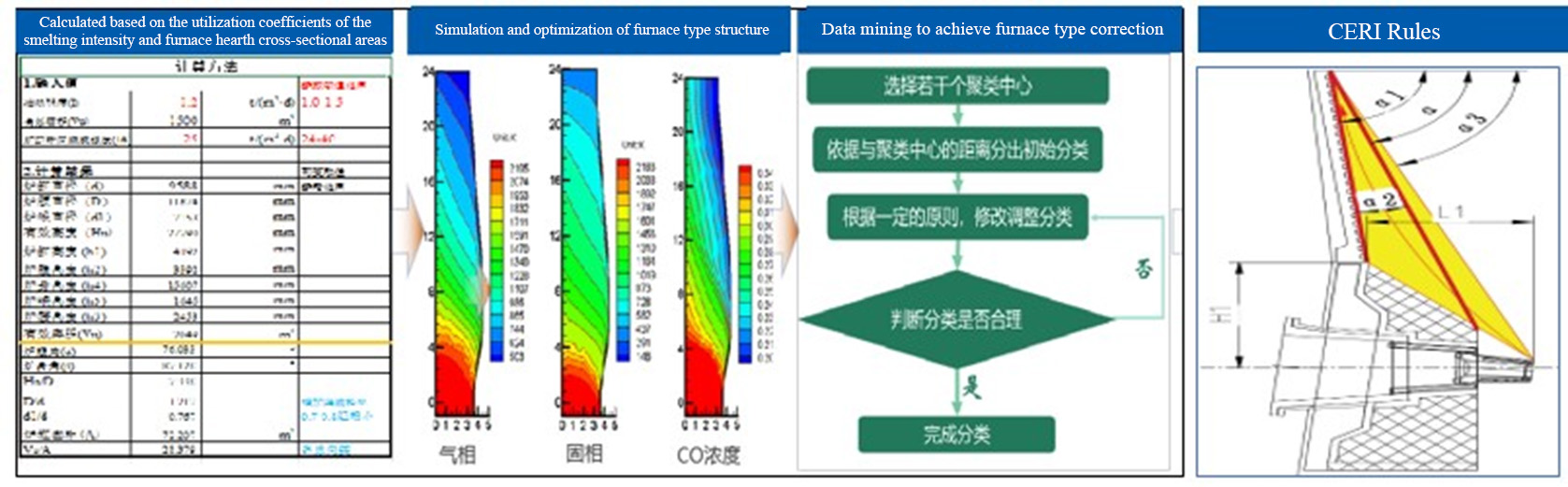
At the same time, the development of proprietary technology for the transition between the tuyere zone and the furnace belly zone, known as the CERI α Rule, provides guidelines for furnace belly angle design, ensuring stable slag hanging on the furnace belly cooling stave to form a supporting layer. By positioning the furnace belly away from the tuyere swirl zone, this design allows for a certain degree of natural adjustment in the furnace belly angle, thereby extending the service life of the cooling equipment.
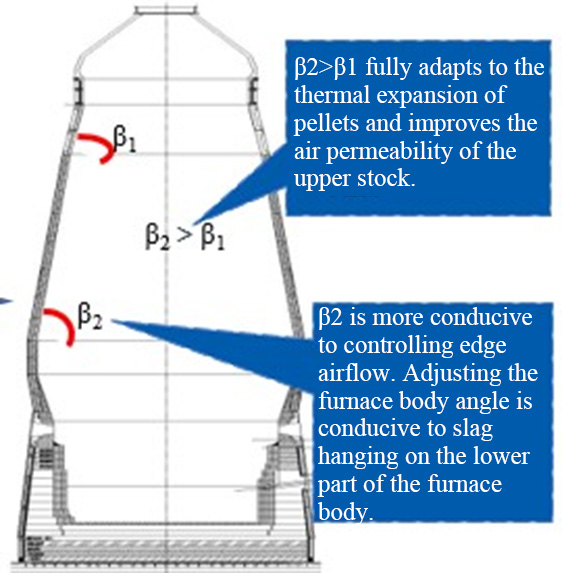
The design of the aforementioned blast furnace model is capable of meeting the demands of high smelting intensity, high thermal load, and diverse burden compositions. At the same time, it takes into account factors such as investment costs, operating costs, and equipment reliability to ensure the technical and economic rationality and cost-effectiveness of the blast furnace. Guided by this furnace design framework and incorporating the results of hot tests on pellets, simulation modeling, and pilot tests, a variable-taper furnace structure was developed to accommodate low-carbon smelting with a high proportion of pellets. This design improves the permeability of the upper burden and enhances slag hanging capacity in the lower furnace body.
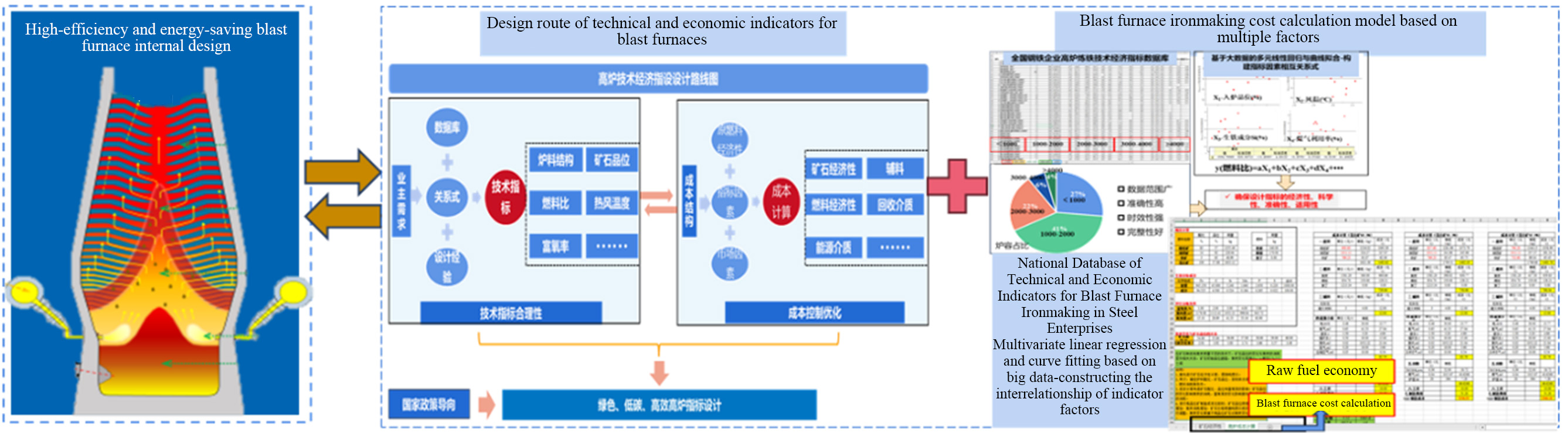
Building on the furnace designs that achieved excellent performance metrics as described above, we will establish a cost accounting system. Based on the company’s actual raw fuel specifications, and in conjunction with cost analysis, we will optimize and ultimately select an economical, adaptable, and suitable furnace design.
Innovation 2: Modular cooling structure.
Currently, three main types of cooling structures are used for the hearth, furnace bosh, and lower section of blast furnaces in China. First, there are fully cooling stave structures. Cast iron cooling staves are low-cost and wear-resistant, but they lack sufficient cooling capacity; cast steel cooling staves offer good resistance to thermal fatigue, but they require sophisticated manufacturing processes and have limited applications; copper staves provide excellent thermal conductivity and form a slag layer quickly, making them the mainstream choice, but they impose strict requirements on raw fuel, as well as on operational procedures. Second, the fully cooling plate structure requires a high investment and has few domestic applications. Third, the plate-wall composite structure effectively reduces cooling dead zones and extends service life, making it a widely recognized long-term solution; however, traditional plate-wall composite structures suffer from issues such as stress concentration caused by the numerous openings in the furnace shell.
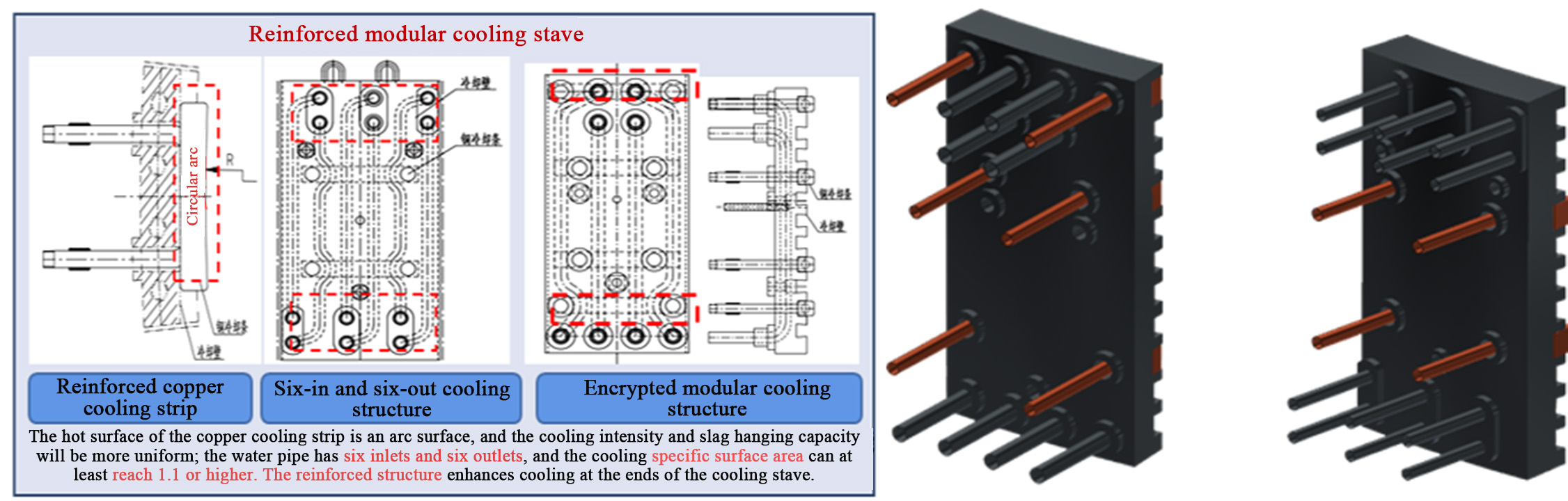
Addressing the challenge that traditional cooling structures struggle to achieve long service life under high smelting intensity, CERI has innovatively developed a second-generation modular cooling structure. This development is based on a systematic analysis of blast furnace cooling stave damage both domestically and internationally, as well as temperature field simulations, verification, and continuous optimization. This structure features a cast iron cooling stave as its main body, with protruding copper cooling strips embedded within it, significantly enhancing the cooling efficiency of the hot surface and improving slag crust stability.
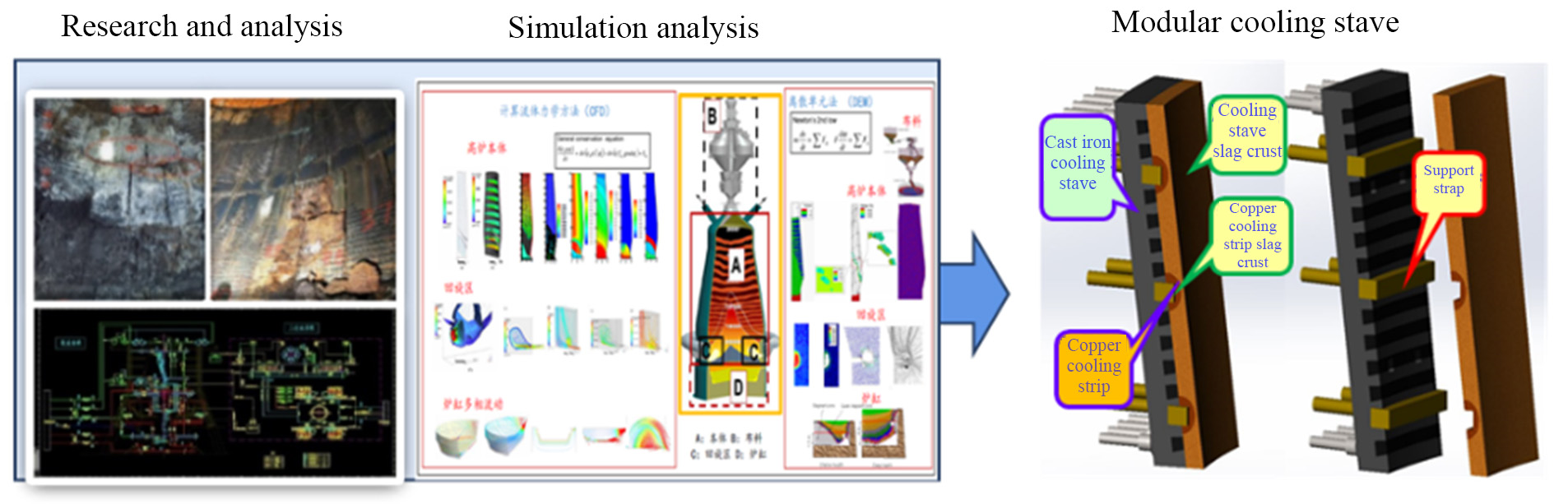
Its technical advantages are as follows: 1) Copper cooling strips are inserted into the dovetail grooves on the hot face of the cooling staves to enhance cooling efficiency. This creates a solid slag crust around the copper cooling strips, acting as "anchor nails" and resulting in a more stable slag crust; 2) Compared to first- and second-generation designs, the spacing between copper cooling strips has been reduced, the width of the strips has been increased, and their protrusion length has been appropriately extended. Additionally, the strips are designed with a curved profile to optimize their arrangement; 3) The number of openings in the furnace shell has been reduced, addressing issues related to construction difficulty and stress concentration in the shell; 4) The copper cooling strips fully leverage the superior cooling performance of copper, significantly reducing investment costs compared to structures combining copper staves with plate walls or those featuring densely arranged copper cooling plates.
Innovation 3: A New Thin-walled Furnace Body Structure with Integrated Plate-wall Design
Since the 1980s, CERI has been a pioneer in the development of plate-and-wall integrated blast furnace cooling structures. With experience in 110 blast furnace projects, these structures are widely used in blast furnaces ranging from 350 m3 to 2,560 m3 in capacity. For example, a certain steel enterprise’s 1,300 m3 blast furnace, which employs a structure combining copper cooling plates with ductile iron cooling staves, began operations in January 2006. During its first furnace campaign, it achieved an average utilization coefficient of 3.5 t/m3·d, with zero damage to the cooling equipment and an actual service life exceeding 11 years, fully demonstrating the high efficiency and long service life of the plate-wall composite structure.
Since the introduction of the thin-walled blast furnace concept, its design-which more closely resembles operational furnace profiles and enables faster attainment of full production capacity-has generated significant economic benefits for numerous domestic steel enterprises. However, as blast furnace operating standards continue to improve and smelting intensity increases, premature damage has begun to occur in the cooling structures of high-heat-load zones in thin-walled blast furnaces in recent years. This has made it increasingly difficult to ensure the long-term, stable operation of thin-walled structures under high-intensity smelting conditions, posing a challenge to the goal of achieving a "long service life" for blast furnaces.
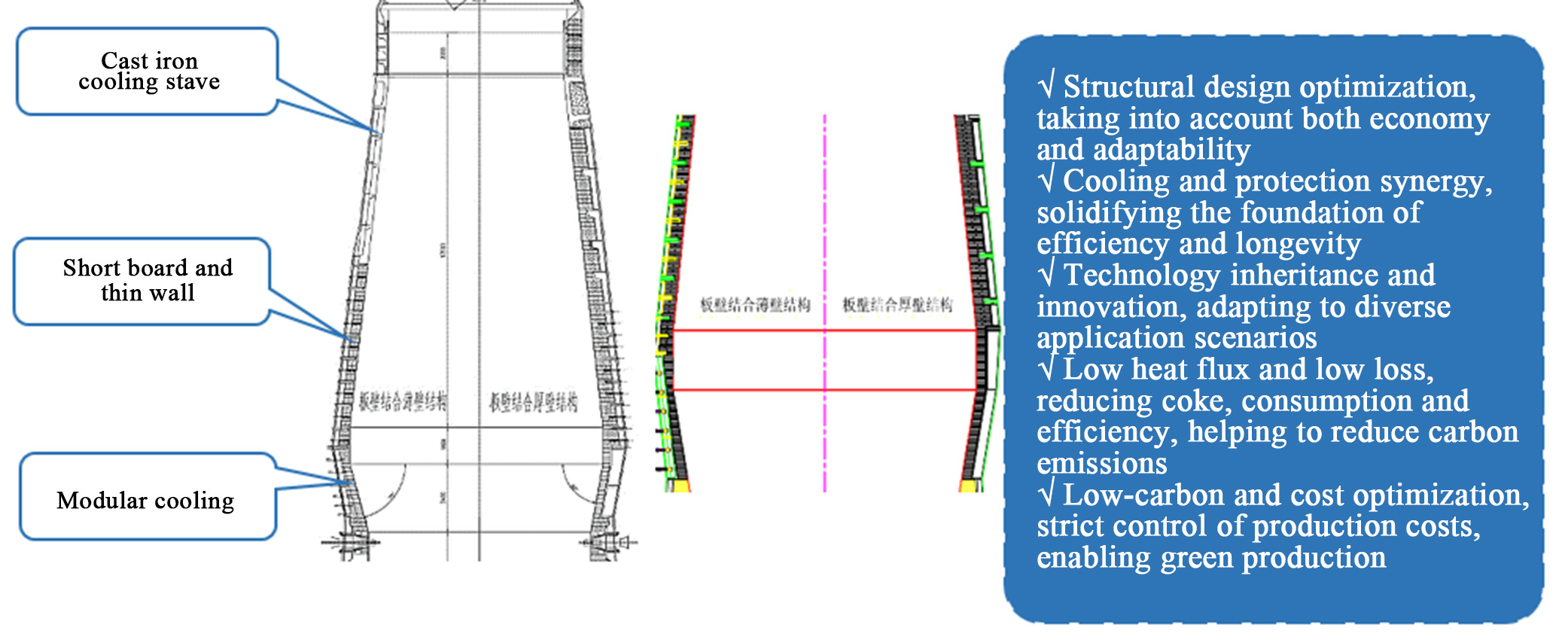
To effectively address the current issues of fragility and short service life in the cooling structures of high-heat-load zones in thin-walled blast furnaces, while fully leveraging the long service life advantages of plate-wall composite structures, CERI has independently developed a new generation of “innovative plate-wall composite thin-walled furnace body structure”. By deeply incorporating the design philosophy of thin-walled blast furnaces and adopting “short plate” and “thin-walled” designs, this solution not only effectively reduces project investment but also ensures a high degree of alignment between the designed furnace configuration and the actual operational furnace; the cooling plates and cooling staves are arranged in a "triangle" formation, interdependent and working in concert. The cooling plates serve a dual function of deep cooling and supporting the brick lining, while the brick lining effectively protects the cooling staves and plates, forming a synergistic cooling and protection system that provides reliable technical support for the long-term, high-durability operation of thin-walled blast furnaces. At the same time, in the context of low-carbon operations, this design ensures a brick lining of a certain thickness, significantly reducing heat loss from the blast furnace and achieving the dual goals of low carbon emissions and long service life.
Innovation 4: Segmented and zoned cooling control technology.
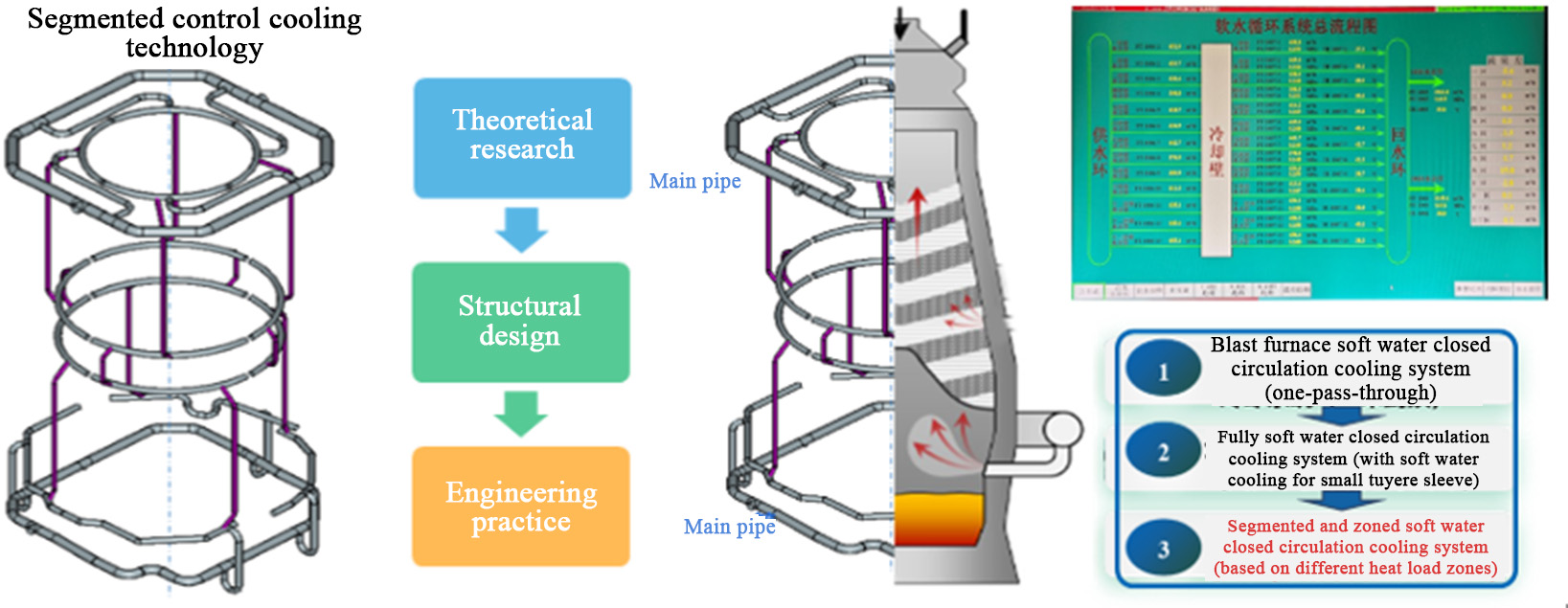
Blast furnace wall temperatures fluctuate significantly when producing with a diversified burden composition. Traditional top-to-bottom water cooling methods struggle to achieve precise temperature control, resulting in low cooling efficiency and high energy consumption. Working conditions and thermal loads vary significantly across different sections of the blast furnace, so cooling must be carried out in segments and by zone. Consequently, CERI has developed a segmented and zoned cooling control technology. This technology divides the furnace into independent cooling units based on the thermal load characteristics of different zones, employs differentiated cooling strategies, optimizes flow, pressure, and temperature parameters, and incorporates independent monitoring systems. As a result, it significantly improves cooling efficiency and furnace thermal stability while effectively reducing energy consumption.
Innovation 5: Long service life technology for fully heat-conductive furnace bottom and hearths with induced erosion.
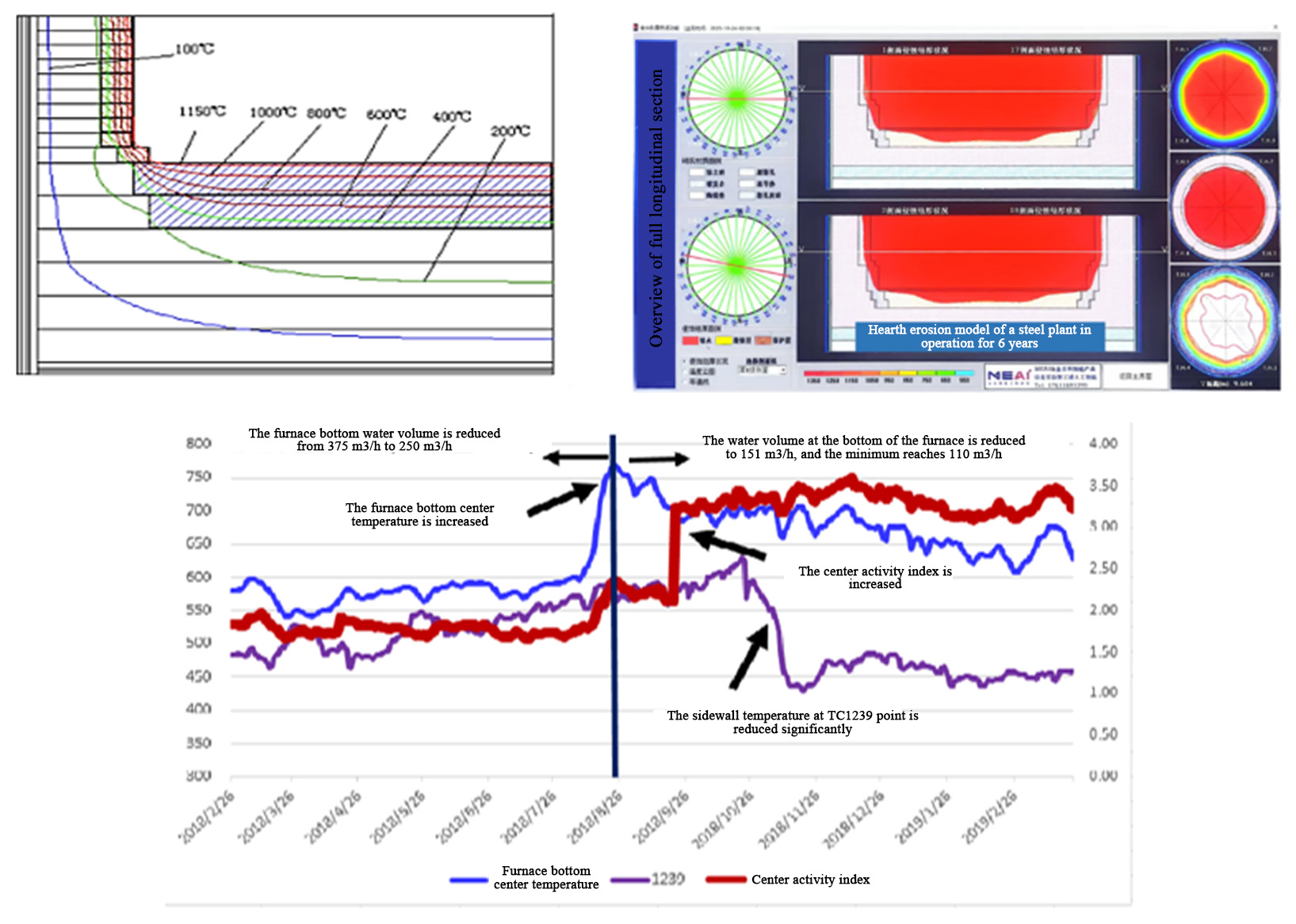
Based on high-temperature experiments, numerical simulations and other means, CERI has carried out technical optimization and theoretical research on the process structure, refractory structure and material properties of blast furnace hearth, focusing on blast furnace hearth design, physical property indicators of refractory materials, hearth temperature field and thermal stress distribution. It has clarified the influence rules of multiple factors on hearth service life, and pioneered the long-life technology of induced-erosion full-heat-conduction furnace bottom and hearth: adopting a long-life furnace bottom and hearth structure that combines high thermal conductivity carbon bricks and ceramic composite materials, while integrating rational temperature gradient design and self-adjusting water volume control system to enhance the stability of the heat transfer system, induce the furnace bottom erosion to develop into a "pot-bottom shape", and achieve long service life of the furnace bottom and hearth.
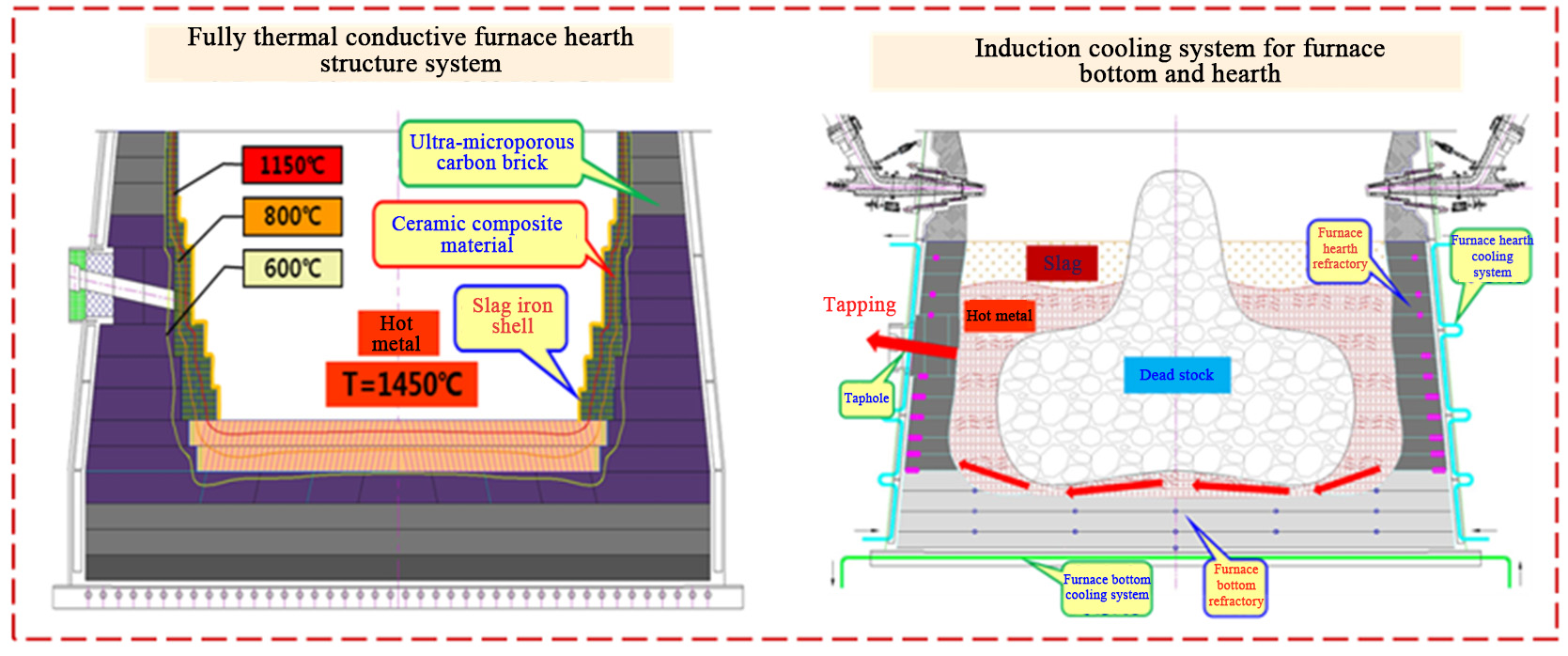
The application of this long service life technology can reduce the temperature of the blast furnace hearth side walls, thereby facilitating the formation of a slag-iron crust on the inner surface of the hearth refractories and mitigating the damaging effects of thermal stress on the refractories. This technology has been successfully applied in several blast furnaces with capacities of 1,680 m3, 2,000 m3, and 3,200 m3, yielding excellent results. As shown in the figure below, the blast furnace at a certain steel plant has been operating stably for six years, with no foot-like erosion observed in the furnace hearth and only slight erosion at the bottom of the furnace.
Innovation 6: A furnace bottom structure designed to prevent warping and coal gas leakage.
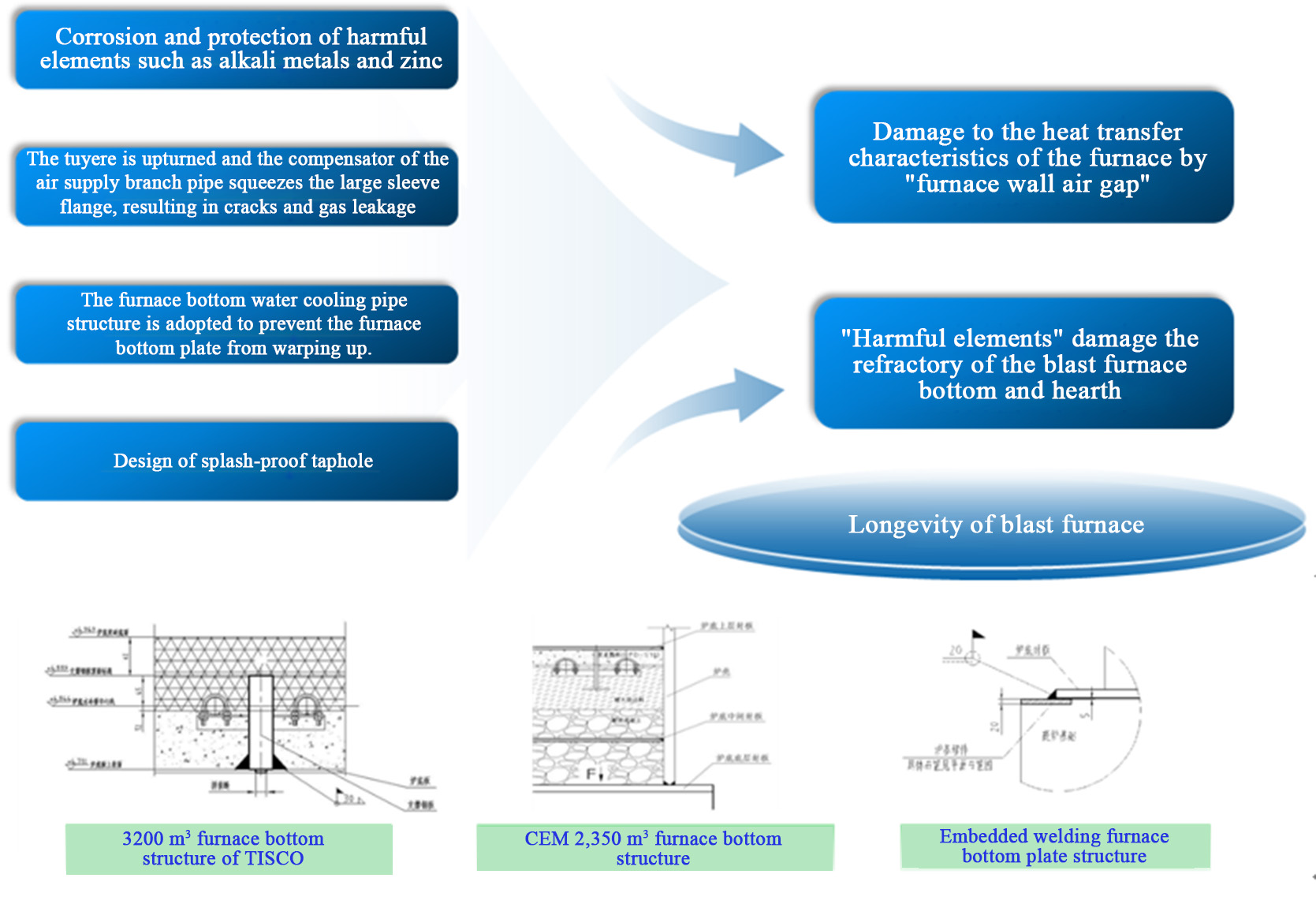
To address the problem of bottom plate warping caused by "air gaps in the furnace walls" and "harmful elements", CERI has developed various furnace bottom structures designed to prevent warping and coal gas leakage. By integrating with the blast furnace foundation via embedded bolts or reinforcement ring plates, the entire blast furnace foundation provides structural restraint to the furnace bottom plate, effectively reducing upward warping of the plate and minimizing the risk of cracks that could lead to coal gas leaks.
Innovation 7: BIM-based full-lifecycle engineering solutions.
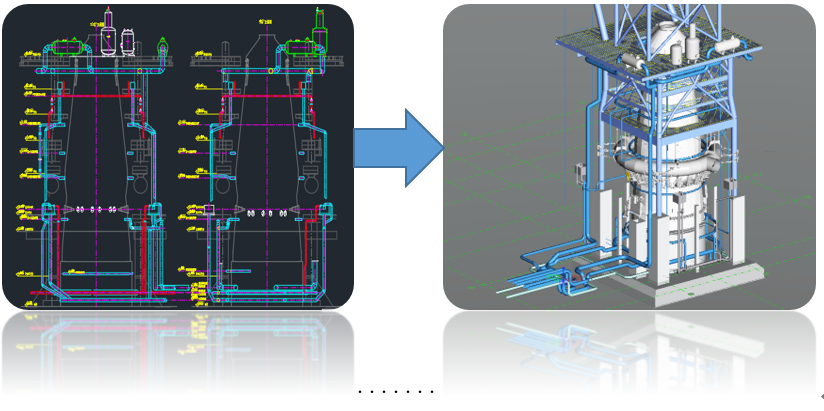
Focusing on the core objectives of “green and low-carbon, highly efficient and intelligent, and cost-effective with a long service life” for blast furnaces, CERI employs BIM-based full-lifecycle engineering solutions. These solutions involve 3D forward design and digital integration of the blast furnace structure, cooling system, refractory lining, piping layout, and monitoring sensor locations. This approach enables the timely identification of conflicts between piping and structural elements during the initial design phase, effectively preventing rework on-site and shortening the construction schedule.
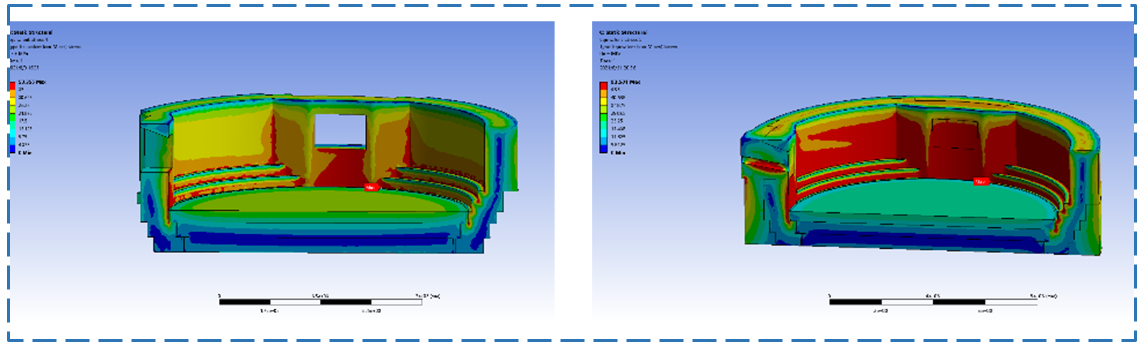
At the same time, by utilizing BIM models to perform multiphysics simulation analyses-including structural stress, heat flux distribution, and fluid flow fields-we optimize the furnace structure and cooling configuration. This approach mitigates adverse effects on blast furnace lifespan-such as high-temperature erosion, stress concentration, and localized overheating-from the design stage, thereby enhancing the structural reliability and service durability of the blast furnace.
Innovation 8: comprehensive intelligent monitoring of blast furnaces.
Comprehensive intelligent monitoring technology for blast furnaces is a key support to achieve “green, low-carbon, efficient, intelligent, economical, and long-life” blast furnace operations. By utilizing models such as furnace body temperature, heat flux intensity, hearth erosion, cooling system, and slag hanging prediction, CERI carries out multi-dimensional online monitoring of blast furnaces to achieve comprehensive perception, real-time monitoring, and dynamic analysis of the operating status of key blast furnace components, thereby timely guiding blast furnace operations, effectively curbing the development of potential hazards, and avoiding unplanned shutdowns. This technology is deeply integrated with blast furnace design and production, significantly reducing the likelihood of furnace body accidents, extending the service life of blast furnaces, and providing robust intelligent support for the safe, long-term operation of blast furnaces while reducing costs and improving efficiency.
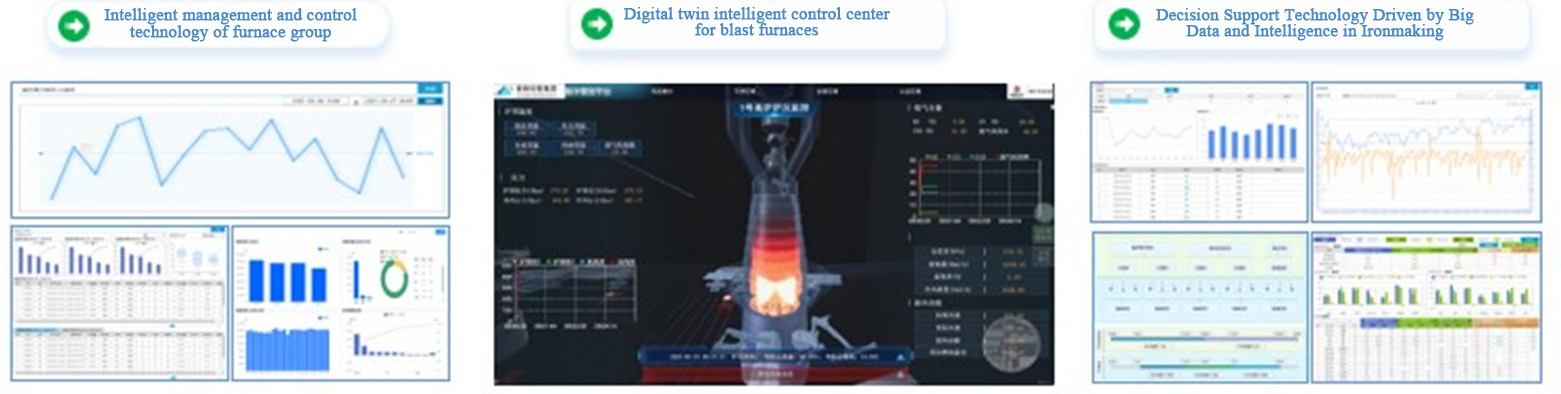
Engineering demonstration:
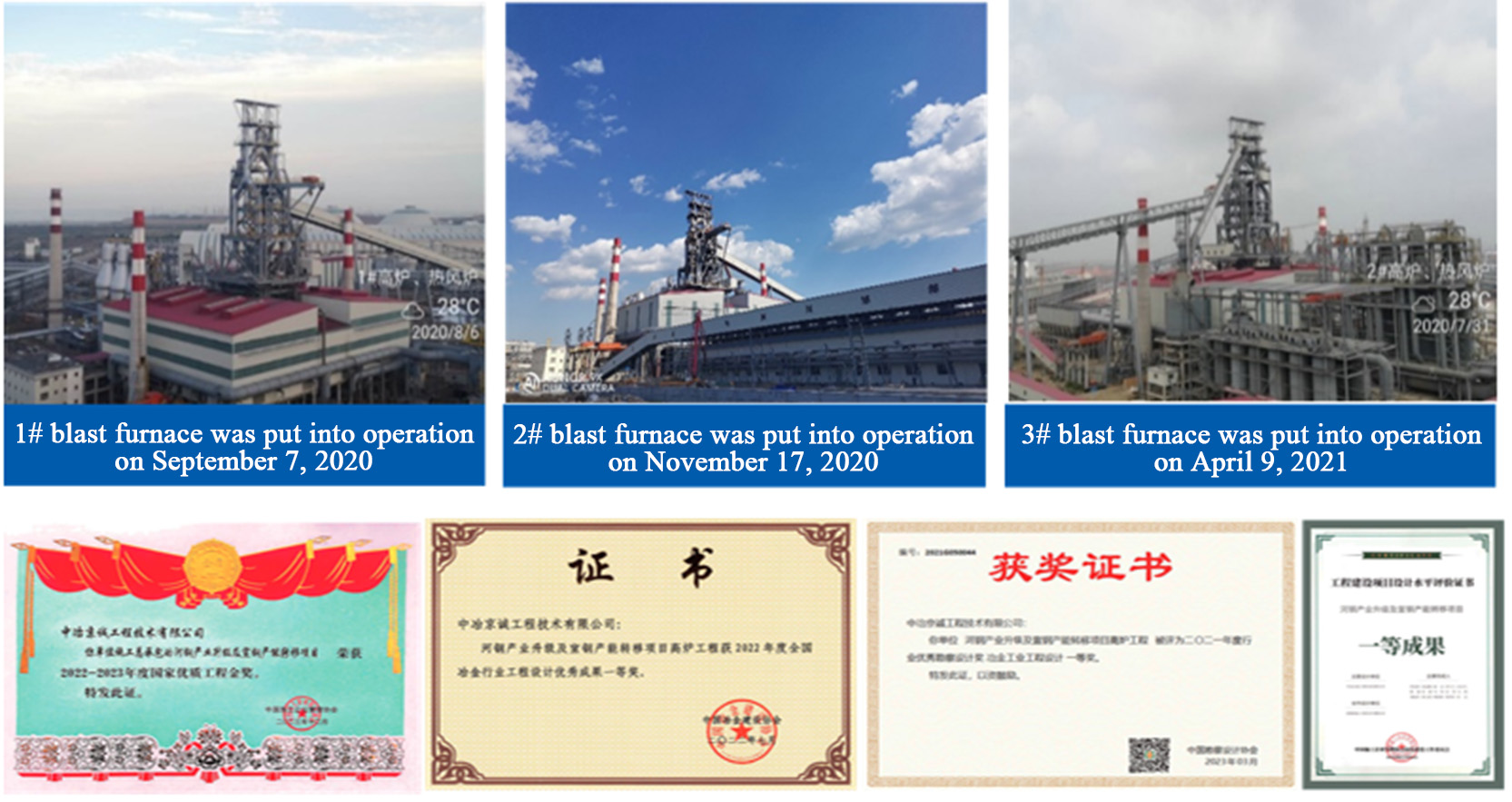
As a comprehensive solution expert for steel enterprises, CERI makes continuous innovations in greening and intelligent engineering technology to create the most competitive “Dream Factory” in the global iron and steel industry for its clients. From 2016 to 2020, CERI continuously undertook the overall design of capacity replacement and relocation projects for over 70% of iron and steel complexes in China. Now, CERI has successfully applied its low-carbon, efficient, intelligent, and long-life blast furnace technology to more than 85 blast furnaces at home and abroad, including those at HBIS Tangsteel, Chongqing Iron & Steel, Bensteel, Lingyuan Iron & Steel, Xingcheng Special Steel Works, TISCO, and Eastern Steel in Malaysia.

3×2,922 m3 Blast Furnace Project of HBIS Tangsteel. HBIS Tangsteel constructed three new 2,922 m3 blast furnaces, and the project covers the entire blast furnace process system, including loading, blast furnaces, hot stoves, and casthouse. The low-carbon, efficient, intelligent, and long-life blast furnace technology of CERI applied to the project helped HBIS Tangsteel achieve Grade A in environmental protection rating and obtain advanced indicators after commissioning.
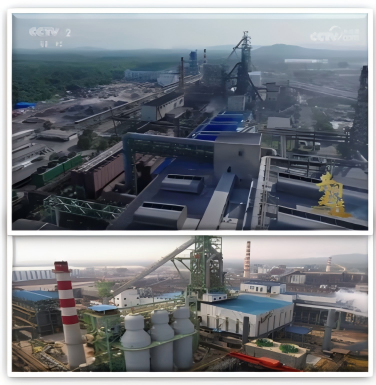
Eastern Steel Project in Malaysia. The low-carbon, efficient, intelligent, and long-life blast furnace technology of CERI was successfully applied to the Eastern Steel Project in Malaysia, and relevant achievements were prominently reported by CCTV's Collaborative Construction program.
Through continuous innovation and good application results, the low-carbon, efficient, intelligent, and long-life blast furnace technology of CERI has received praise and recognition from the industry:
In 2024, the technology was evaluated by the Chinese Society for Metals as having reached the “internationally leading level”; in 2025, it won the First Prize of Science and Technology Progress Award by China Minmetals Corporation; in 2025, it won the First Prize of Metallurgical Science and Technology Award by China Iron and Steel Association and Chinese Society for Metals.